What is a Clickjacking?
Clickjacking is the process where the attacker tricks to click on a link or command that is not visible or disguised as another component. The user may become vulnerable to malware, botnet, and some more cyberattacks. As a result, confidential data, personal information, and security credentials could be compromised by a hacker. Moreover, the user remains at risk of using his/her computer in organized cybercrimes.
The most common method of clickjacking is to place an anonymous page or markup element within an embed frame on the main page the visitor is seeing. So, the user thinks they're hitting the accessible webpage, but they're actually tapping over an unseen component on the secondary page that's been swapped over it.
Underneath multimedia, hyperlinks can be concealed that prompt a specific action, such as a Social media fan page or purchasing something from an online store. For the clickjacking attack to really be effective, the victim might have to satisfy specific requirements, including such remaining signed-in social media profiles.
If a person is duped into installing anything onto their system, s/he will be dealing with a hacked system sharing the access to the attacker. They may be able to remove the infection with an anti-virus check inside the best situation. They would need to wipe their device and reinstall the software under the worst scenario.
What is the Purpose of Clickjacking?
The attacker can benefit from the misdirected hits in a range of methods. The replication of a user credentials form on a web page is a popular kind of clickjacking. A user thinks they're filling out a standard form, but they're actually filling out boxes that perhaps the attacker has layered over the interface. Cybercriminals will go for credentials, banking information, and whatever other sensitive information they could steal their hands on.
Clickjacking is not the hacker's final objective; it's just a way to get people to believe they're to do safe activity when they're actually doing something dangerous. The real attack can indeed be something that could be done through website pages. In some advanced ways, an attacker might initiate a phishing, spear-phishing attack, or spread ransomware to the computer or network. Even, the attacker could run brute force, or a DDoS attack using your system.
What are the Categories of Clickjacking?
Clickjack is subject to a wide range of threats. Because it is vulnerable to a number of security breaches, clickjacking is a significant risk. A few types of clickjacking attacks are given below:
-
Classic
-
Likejacking
-
Nested
-
Cursorjacking
-
MouseJacking
-
Browserless
-
Cookiejacking
-
Filejacking
-
Password manager attack
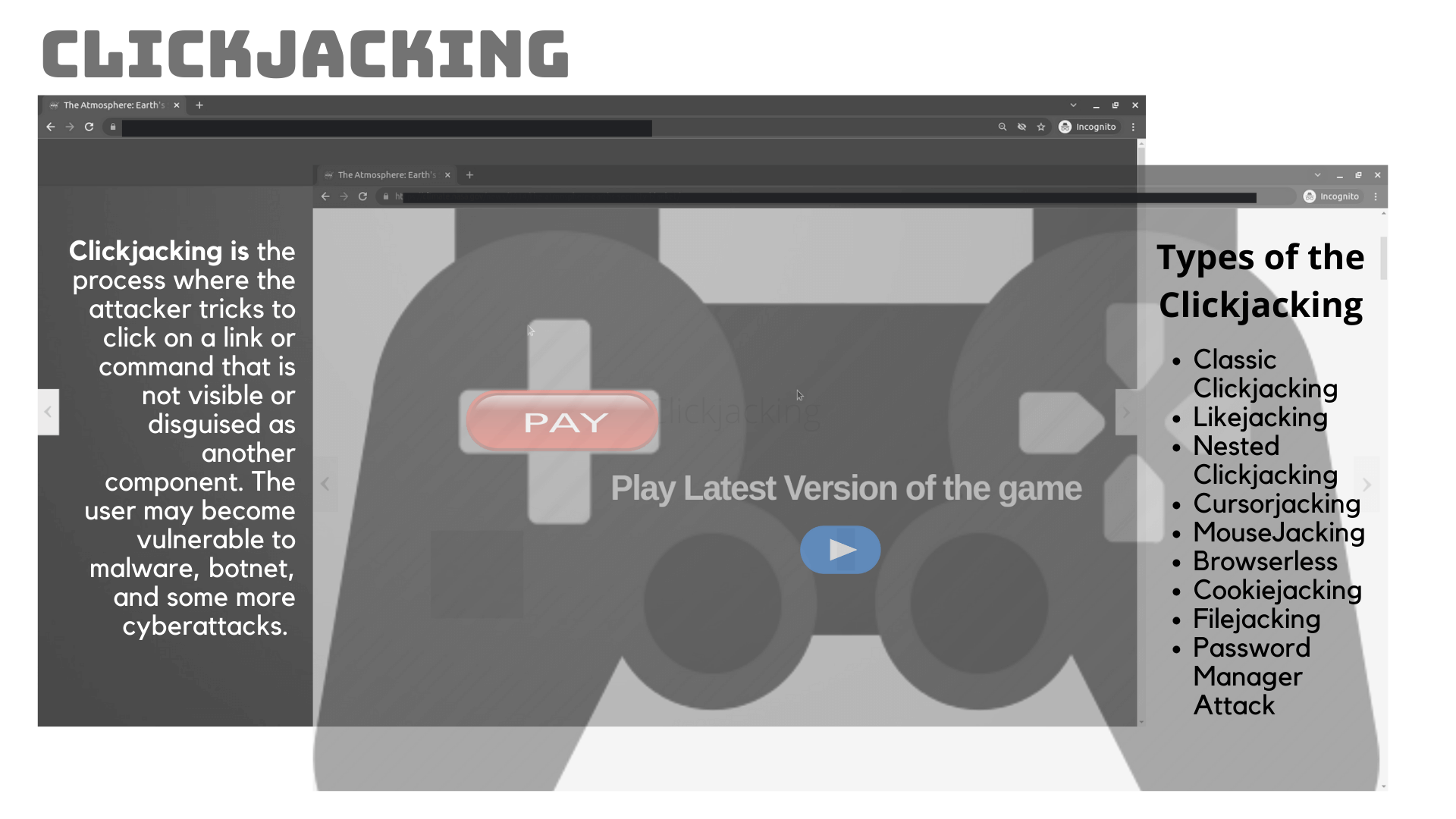
Figure 1. *Definition and Categories of Clickjacking
1. Classic Clickjacking
As mentioned earlier, when a user is trapped into a link placed by an attacker and gets compromised, that situation is known as classic clickjacking. In such circumstances, users are enticed to engage in elements that are openly inserted on fraudulent internet pages, which might also result in harmful activities on genuine web pages without the clients' awareness.
Although technological execution of such methods could be difficult due to cross-browser compatibility, various programs, such as Metasploit, provide nearly entirely autonomous user exploits on susceptible pages.
2. Likejacking
Likejacking is the same thing as clickjacking, but with a different function. Likejacking, instead of diverting the participant's clicking to any possible way to like a specific Facebook page.
The hackers provide a web page with two levels. A Facebook "Like" button is programmed to follow your movement of the mouse on the background layer. And, the first layer displays the enticement that you were unlucky enough to be fooled by the hackers. You are basically hitting the Facebook Like button and distributing the spyware with no issue wherever you navigate the website.
3. Nested Clickjacking
As the name suggests, nested clickjacking works in between multiple iframes. The attacker embeds malicious web pages between two original frames in the website structure. This manipulation allows running the script or command from the visitor's engagement. In this case, visitors remain at high risk of compromising digital assets.
To explain, a nested clickjacking attack works due to a vulnerability in the HTTP header, specifically in X-Frame-Options. Due to the vulnerability, the attacker could steal confidential information from the system through malware and other advanced cyber attacks.
4. Cursorjacking
Coursorjacking is similar to clickjacking, and often it is designated as a variant of clickjacking. But, there are a few dissimilarities between them. Rather than eavesdropping, the hacker moves the pointer away from where the victim thinks it should be. A push, for instance, may record 50px towards the right about where the pointer appeared.
When the attacker initiates such an attack as mouse movement, they may utilize JavaScript. You as a user may receive the exact x and y coordinates of your present cursor location. Cursorjacking's goal is to keep the targeted pointer over the button throughout all times, causing the user to click anywhere the attacker desires. But the user is clicking on the button set by the attacker.
5. MouseJacking
Whenever the hacker checks any wireless signals transferred from the wireless mouse to the USB interface of the computer, this one is known as MouseJacking. The information in such dispatches from a mouse explains the mouse's activities.
Clients could notice a small pop-up window containing malware; however, the situation immediately continues as normal, but they often don't consider it critical enough to alert the cybersecurity department.
6. Browserless
Browserless clickjacking does not require the browser in order to initiate a cyberattack. Usually, browserless clickjacking attacks are planned for mobile devices where the attacker manipulates the pop-up notification in the mobile devices.
In such an attack, the attacker changes the code behind the pop-up and toast notifications and drives the user to click on the notification and land on the action page set by the attacker without his/her consent.
7. Cookiejacking
Cookiejacking is a method of gaining unauthorized access to numerous web applications using browser information. Typically, a web browser stores information following some encryption process when a user visits particular websites and logs in using security credentials, widely known as cookies. In such a clickjacking attack, the attacker steals the cookies and takes control over the account.
The majority of files comprise irrelevant info. Cookies are used to save credentials required to verify so users will not have to sign in again when they are signed in to a website like Linkedin, Instagram, or Google. The hacker might spoof users or gain access to sensitive information on the compromised site on the internet if such cookies are hijacked.
8. Filejacking
Penetration of folder data from the targets underneath the computer system is performed using the filejacking process. Through smart interface modification inside the browser, the module is attached to the hacker's computer.
Whenever getting a file from the internet, the filejacking technique strongly affects the victim utilizing the computer system's "Choose Folder" modal box. When conducting this approach, one would try to persuade the client to choose a folder holding important documents, for example, by using genuine-looking fraudulent material that shows whatever the victim will see if they click the "Download to..." link. With both the folder input element, Javascript would examine the documents in the folder and afterward POST each of them directly to the attacker's server.
9. Password Manager Attack
Password managing applications and modules are the ultimate targets of the attackers. As most browsers contain a password management module to provide a better user experience, cyber attackers take advantage and attack the specific application or module to gain access to the passwords within the manager.
Password manager attacks could succeed when the application is exposed to some vulnerability. In recent days, password manager attacks have increased significantly when users lose data regularly.
How to Prevent Clickjacking Attacks
Considering the basis of the approach is indeed the capability to include a webpage inside an iframe, even though the app. So, a clickjacking attempt can damage any form of software, regardless of the technique or structure that was used to construct it. As a result, other complex frameworks are also at risk, not just traditional web apps. Here are some common practices to follow in order to avoid clickjacking attacks:
- Client-side Methods
- Server-side Methods
1. Client-side Methods
Clickjacking techniques enclose a trusted website inside an iframe and put hidden items on top of it. Assure that a website can't be contained inside an iframe by a malevolent website if you don't want it to be used in a clickjacking attempt. It could be accomplished by explicitly instructing the visitor via HTTP headers or by utilizing JavaScript in clients' endpoints of earlier browsers. Here are some client-side methods:
-
NoScript
-
GuardedID
-
NoClickjack
-
Gazelle
-
Intersection Observer v2
1. NoScript
NoScript is a software extension for web browsers that blocks malicious frames and protects users from clickjacking attacks. The extension and NoScript can be used as HTML tags and other formats. Irrespective of the ways it's used, the main function behind NoScript is the same, and an open-source project runs it.
NoScript restricts dynamic command-line information by nature, although this may be bypassed permanently or temporarily by allowing listing a website or URL from the project.
Engineers may use NoScript to check exactly how well their website functions without enabling JavaScript. Also, It can get rid of a lot of annoying online components that need JavaScript to work, like pop-up notifications and some subscription services.
2. GuardedID
GuardedID protects users against harmful keyloggers by enabling an encryption process in the keyboard data and sending it straight to the web browser or workstation over a safe channel that spyware can't see.
Before it displays on the screen, conventional keyboard information moves through a number of processes. There is a weakness in such procedures that cyber attackers aim to exploit by deploying keylogging malware. GuardedID eradicates the vulnerabilities by circumventing the areas where spyware can hide. It adds another layer of protection by encrypting the route it establishes with a 256-bit encryption algorithm.
3. NoClickjack
NoClickjack is another extension that is mostly used in the internet browser to protect from clickjacking. This plugin can potentially reveal Clickjack layers set by an attacker, ensuring that the sessions are protected from cyberattacks.
Using the plugin could guide you where not to click unwisely and where to place the exact command to the server. NoClickjack is useful in many cases to remain safe from clickjacking attacks.
4. Gazelle
Gazelle is a safe online browser associated with Internet Explorer that employs an Operating system security paradigm and has modest anti-clickjacking capabilities on its own.
Normal internet explorer is a prime target for hackers as many users compromise personal information because of using internet explorer, which is vulnerable to attackers. However, Gazelle protects the user from clickjacking attacks by providing an extra layer to secure the user experience.
5. Intersection Observer v2
Developers love Intersection Observer, particularly because Apple gained support for it recently, and it's now accessible in all major web browsers. The application programming interface (API) of Intersection Observer2 allows the implementation of a secure way of loading the website content, especially not everything at a time, but one by one, depending on the priority.
2. Server-side Methods
Three types of server-side methods are as follows:
- Clickjacking Prevention with X-Frame-Options Response Header
- Clickjacking Prevention with SAMEORIGIN Response Header
- Clickjacking Prevention with Content Security Policy Header
1. Clickjacking Prevention with X-Frame-Options Response Header
X-Frame-Options Response Headers are responsible for allowing and disallowing iframes on a webpage. Changing the value of response could result in a good defense if the value is set for it. Here are some values to execute:
-
DENY: to prevent the domain from framing any content. Putting the value DENY is recommended for all unless the user needs to show anything using frames.
-
SAMEORIGIN: to allow the website to frame content.
-
ALLOW-FROM URI: this value permits a specific URL to frame the page for further uses.
2. Clickjacking Prevention with SAMEORIGIN Response Header
As mentioned earlier, the SAMEORIGIN value allows the site which is used to frame the content. However, within this value, other websites remain inaccessible to frame content. So, the currently browsing website can be framed if it is SAMEORIGIN in the response header value.
3. Clickjacking Prevention with Content Security Policy Header
The content security policy header is a newly introduced component compatible with html5. It offers more security than the X-Frame-Options header does. It's set up because then webmasters may filter specific domains out of which assets could be accessed, as well as websites from which they might embed a webpage.
Can a Firewall Help to Prevent Clickjacking?
A firewall is a network security equipment that analyzes inbound and outbound traffic and determines if the particular requests should be allowed or blocked based on a pre-set of security protocols. Technically, a firewall deals with the network traffic, and it's hard for firewalls to prevent clickjacking. However, some next-generation firewalls are actively working against clickjacking.
Moreover, Web Application Firewalls (WAFs) keep anyone from interfering with your site and injecting code. However, companies continue to classify this as nice rather than an urgent need.
Does Using Browser Extensions Protect Clickjacking?
Using browser extension is one of the prominent ways of protecting against clickjacking. By far, it is the most practiced method against clickjacking. However, a variety of browser extensions work differently. More or less, the browser extension that prevents clickjacking works in three ways:
-
Request Analysis
-
Header Analysis
-
Page Analysis
Following the process, web extensions can prevent clickjacking attacks.
However, NoClickjack and NoScript Security Suite are the two best security extensions for Chrome and Mozilla Firefox web browsers.
What are the Clickjacking Examples?
You may see a notification on your phone that you've won a prize, and the notification guides you to click on a link placed by the attacker. In this case, you are at risk of compromising confidential information to an unexpected person. However, the attack is not only limited to sending or manipulating notifications but also there are other ways of initiating a clickjacking attack.
The website you are visiting can often be vulnerable to a clickjacking attack. Due to the incautiousness of the methodology, a website or application can be vulnerable to clickjacking attacks if it is not configured following the clickjacking prevention guideline. However, the user remains at risk of a clickjacking attack both from the server side and the client-side.
Another example is email marketing to authorized users of a business account is financial abuse. This would necessitate requiring insider information or the use of online identity theft techniques to approach particular individuals. Instead, bulk emails might be sent through the hopes that one of the device's users will answer. The message might include a promising link that would take the recipient to a new website with an advertisement.
Is Clickjacking Dangerous?
Yes. Clickjacking is a moderate problem throughout most critical applications, including such commercial or confidential data management software, due to the possible hazards it exposes and its intrinsic effect. The distribution plan of attack and its implementation vectors, also known as attack vectors, are the reasons it is a moderate risk problem rather than a highly risky one. Because users must intentionally contact the infected page, the exploit necessitates human involvement and an aspect of psychological manipulation.
Other considerations include the application's surroundings and its exposure to certain user categories. Furthermore, the sort of data that may be acquired or tricked must be taken into account when assessing potential threats because it will be unique to the targeted organization.
What is the Clickjacking History?
Robert Hansen and Jeremiah Grossman found clickjacking in 2008 while searching for a technique to get around anti-Cross Site Request Forgery (CSRF) and the browser settings similar source requirement.
In the most basic form, clickjacking is just the utilization of translucent or hidden units to target people's interaction with the mouse. Those strands may be applied to commonly used threat vectors like icons and URLs, fooling visitors into engaging with viruses and malware.
Implementation of web pages has remained a source of worry for vulnerability evaluations of online applications. Malicious web pages that wrapped genuine web pages inside a frame and employed JS keyloggers to capture login details were used in the early attempts. Cross Frame Scripting was the name given to this problem. To avoid being contained inside another site, secured websites' authentication pages used frame-busting JavaScript to avoid the content from becoming wrapped in frames.
If indeed the page would be in a frame, the script would identify it and establish itself as the top frame. Possessing a credible web page integrated inside a fisetin of a suspect's site posed potential damage. Any business would not want a rising webpage integrated within a harmful one.
What are the Other Attacks Similar to Clickjacking?
Clickjacking is not often a stand-alone attack to steal information from a victim's system; rather, it works with similar attacks for better and more accurate results. The attacker plans some similar attack to clickjacking to maximize the chance of getting access and increase the data compromisation rate.
Cyber attacks that are similar to Clickjacking are as follows:
-
Reverse Tabnabbing: Reverse Tabnabbing is an attack similar to clickjacking. It seems to be a technique in which a web page connected to the intended webpage can overwrite the targeted webpage, such as by replacing this with a phishing webpage. Because the client was now on the proper web page when this was switched, people have become less likely to spot that it has already been moved to a malicious site, particularly if a homepage seems identical to the objective. If somehow the victim logs in to this webpage, their passwords are forwarded to the phisher instead of the original one.
In addition to the targeted site's ability to rewrite the targeted webpage, if the client is on an unclassified system, such as a public wireless internet connection, any link that uses HTTP protocol instead of HTTPS can be faked to replace the targeted URL.
-
Cross-Site Request Forgery: A cross-site request forgery is a harmful exploit in which an untrusted person sends illegal instructions to a webpage. Such an attack is carried out by embedding a hyperlink or function in a webpage that contacts a site where the client is believed to be authorized.
In further explanation, the cross-site request forgery attack involves the sites that require users' identity to share. When the user shares it, the attacker tricks the user into stealing the information through a cross-site request forgery attack. Moreover, The participant's browser is tricked into delivering HTTP queries to a specified location.
The supervisor seems to be the main distinction between these attacks, which are otherwise extremely similar. An internet browser acts on behalf of users in cross-site request forgeries. The client performed nothing but opened the webpage, and the browser loaded the photos. The client is proactively engaging with anything on the website when clickjacking occurs. Between both the client and the requested activity, there is an additional layer, as well as the client is fooled into performing what the added element comprises.